- +255 767035927
- info@africajoytours.com
- Tanzania Travel FAQs
- Contact us

6 Day Tanzania Wildebeest Migration Safari
From USD 2,125 per person
The 6 Day Tanzania Wildebeest Migration offers a thrilling safari experience across the Serengeti and Ngorongoro ecosystems. Every year, over a million wildebeest, joined by zebras and gazelles, follow an ancient circular route in search of fresh grazing and water. Therefore, this safari provides travelers with unforgettable wildlife encounters amid breathtaking landscapes. Consequently, it is perfect for nature enthusiasts seeking to witness Africa’s greatest natural spectacle. Moreover, the journey offers dramatic predator-prey interactions, spectacular river crossings, and endless 6 Day Tanzania Wildebeest Migration in photographic opportunities.
The Great Migration: What to Expect
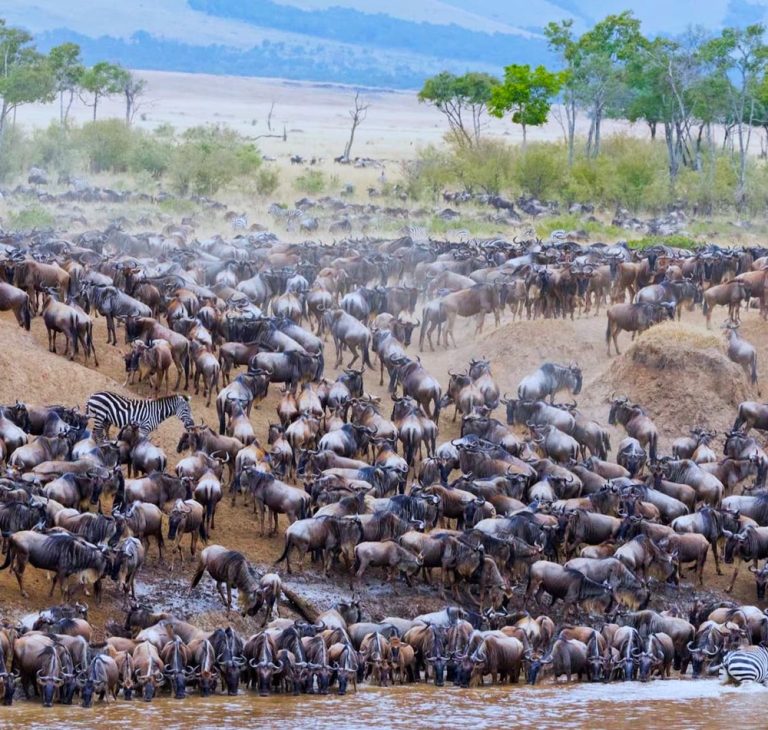
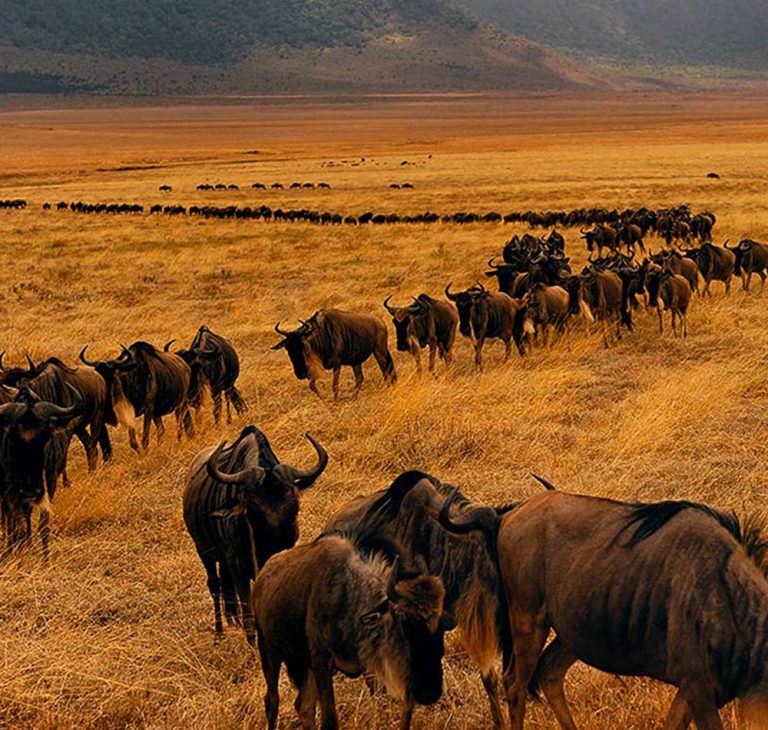
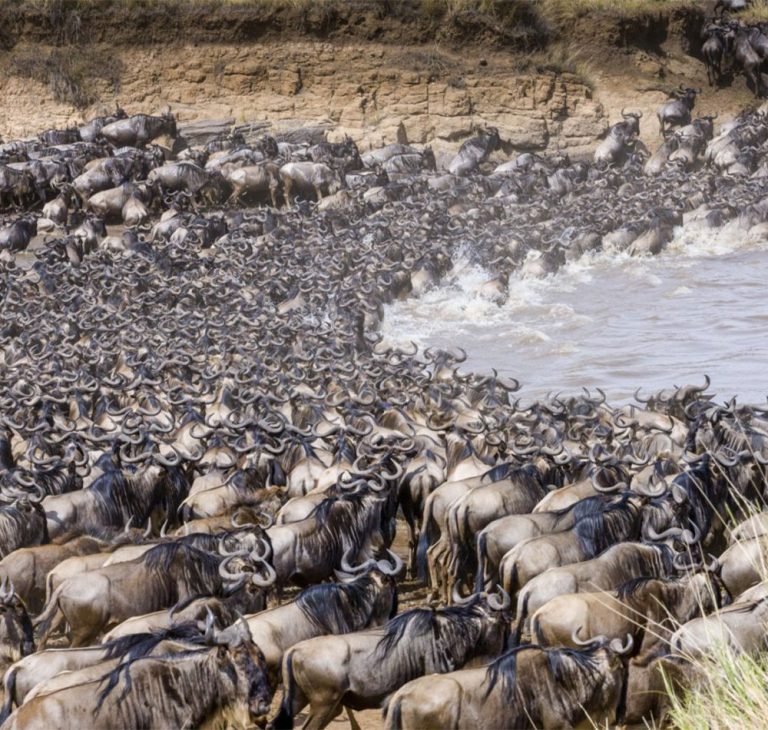
The 6 Day Tanzania Wildebeest Migration allows travelers to witness the largest annual animal migration on Earth. Every year, over 1.5 million wildebeest, 350,000 Thomson’s gazelles, and 200,000 zebras move in a clockwise circuit between Tanzania’s Serengeti and Kenya’s Masai Mara. Along the way, predators such as lions, cheetahs, leopards, and crocodiles create high drama. In addition, thousands of calves are born, replenishing the herds and sustaining the circle of life. As a result, this safari combines adventure, photography, and immersive wildlife viewing. Furthermore, travelers can expect river crossings, expansive plains, and encounters with hundreds of species, ensuring each day is unique.
Timing the 6 Day Tanzania Wildebeest Migration
June and July
During June, the dry season begins, and herds gather in the Western Serengeti near the Grumeti River. Consequently, river crossings start as wildebeest face crocodile-infested waters. Moreover, June is a quieter month for tourists, offering excellent value and more private wildlife encounters. By July, the herds move north toward the Mara River, marking the onset of high season. Therefore, witnessing the dramatic Mara crossings during this time is one of the safari’s highlights. Additionally, guides help you understand the patterns and best viewpoints for photography.
August to October: 6 Day Tanzania Wildebeest Migration
From August onwards, herds spread across northern Serengeti and the Masai Mara. As the Mara River remains a key obstacle, predators lie in wait along its banks. Even when water levels are lower, crocodiles and lions claim many victims. By September and October, the herds gradually move eastward, preparing for their return south. Consequently, this period provides extraordinary wildlife viewing opportunities. Moreover, travelers can witness a variety of interactions between species, adding excitement to every game drive.
November to December
After the short rains, the herds return south into the Serengeti’s eastern plains, including Namiri and other calving areas. By December, they spread throughout the eastern and southern reaches. Therefore, December offers excellent sightings of newborn wildebeest and lush scenery. As the new year begins, the cycle restarts, drawing herds back to the southern Serengeti. Hence, the 6 Day Tanzania Wildebeest Migration delivers a full-circle wildlife experience.
How to Get There: 6 Day Tanzania Wildebeest Migration
The 6 Day Tanzania Wildebeest Migration safari typically starts and ends in Arusha or Nairobi. Travelers fly into Kilimanjaro International Airport (JRO) or Jomo Kenyatta Airport (NBO) in Nairobi. Additionally, transfers to the safari starting point can be arranged. Furthermore, extra accommodation before or after the safari is available on request. Therefore, travelers can plan their trip conveniently without stress.
6 Day Tanzania Wildebeest Migration Itinerary Overview
Arrival Day: Arusha
Although upon arrival at Kilimanjaro International Airport, our driver will greet you, assist with luggage, and transfer you to Tulia Lodge. Here, you can relax and prepare for the adventure ahead. In the evening, likewise you will enjoy a welcome dinner and overview of the upcoming safari.
Dinner and overnight at Tulia Lodge: Bed, Dinner, Lunch, Breakfast included.
Day 1: Arusha to Ngorongoro Crater
After breakfast, drive from Arusha to the Ngorongoro Conservation Area (4-hour journey, 190 km). Upon arrival, enjoy lunch at the lodge. Then, descend 600 meters into the crater for an afternoon safari. Here, you will encounter wildebeest, zebra, buffalo, elephants, lions, and leopards. Additionally, visit Lake Magadi to see flamingos, hippos, and other water birds. Consequently, your first game drive offers a mix of predator and prey sightings.
Dinner and overnight at Ngorongoro Tortilis Tented Camp: Bed, Dinner, Lunch, Breakfast included.
Day 2: Ngorongoro to Northern Serengeti
Furthermore after breakfast, travel toward the Serengeti National Park, leaving the highlands behind. Along the way, pass lush forests of the Ngorongoro Conservation Area, where baboons and leopards may be spotted. Upon reaching the Lobo area, you can witness wildebeest migration patterns depending on the season. Later, enjoy an afternoon game drive before settling at your lodge.
Dinner and overnight at Serengeti Lobo Lodge: Bed, Dinner, Lunch, Breakfast included.
Day 3: Serengeti Migration Game Drive
However you will spend a full day tracking wildebeest and other wildlife. The Lobo and Grumeti regions host elephants, buffalo, lions, leopards, and cheetahs year-round. Moreover, the area offers uninterrupted wildlife viewing in remote corners of the Serengeti Plains. You will also see magnificent riverine trees and abundant birdlife, including kingfishers and fish eagles. Consequently, each game drive provides new wildlife encounters and photography opportunities.
Dinner and overnight at Robins Safari Tented Camp: Bed, Dinner, Lunch, Breakfast included.
Day 4: Northern Serengeti – Mara River Crossings
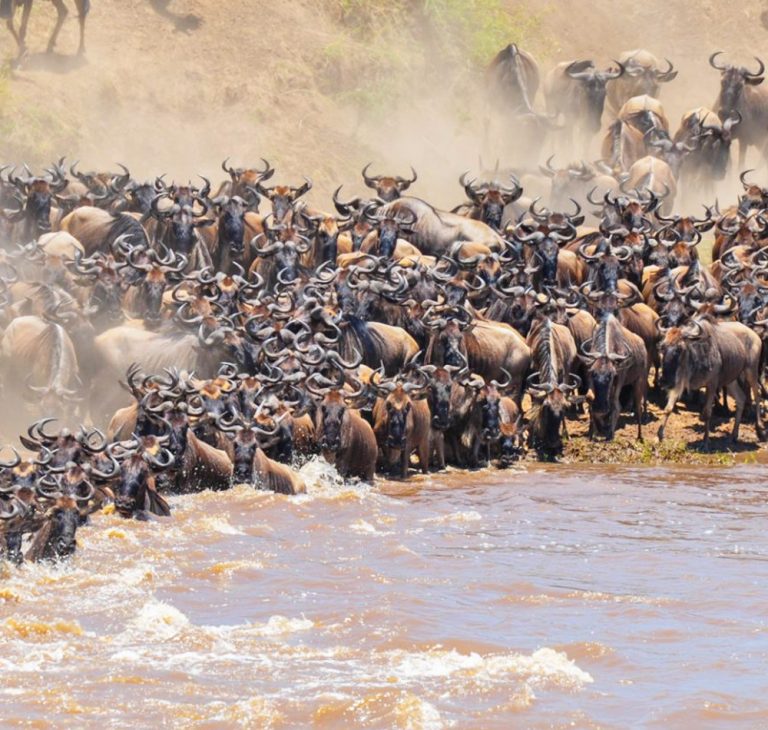
After breakfast, drive to the Wagakuria area, stopping for game drives en route. Here, wildebeest and zebra gather for the famous Mara River crossings. Likewise watch predators waiting along the banks and experience the frantic herds in action. Additionally, enjoy an afternoon game drive in the northern Serengeti. Therefore, this day delivers one of the most dramatic highlights of the migration.
Dinner and overnight at Robins Safari Tented Camp: Bed, Dinner, Lunch, Breakfast included.
Day 5: North to Central Serengeti
Following breakfast, drive south toward central Serengeti (Seronera). On the way, pass rolling hills, woodlands, and open plains. Seronera hosts large lion prides and abundant wildlife. Moreover, the Seronera River attracts many species, enhancing game viewing. Furthermore, enjoy multiple game drives with a picnic lunch during the day. Consequently, this day offers some of the richest wildlife habitats in the Serengeti.
Dinner and overnight at Robins Safari Tented Camp: Bed, Dinner, Lunch, Breakfast included.
Day 6: Serengeti to Arusha
In conclusion after breakfast, enjoy a final game drive en route to Arusha. Consequently, this concludes the 6 Day Tanzania Wildebeest Migration safari. Optionally, extend your trip with a 4-day Zanzibar beach holiday for $900 per person. Thus, you can combine thrilling wildlife adventures with relaxing beach time.
6 Day Tanzania Wildebeest Migration Included
- All Park entrance fees to Ngorongoro Conservation Area and ndutu area
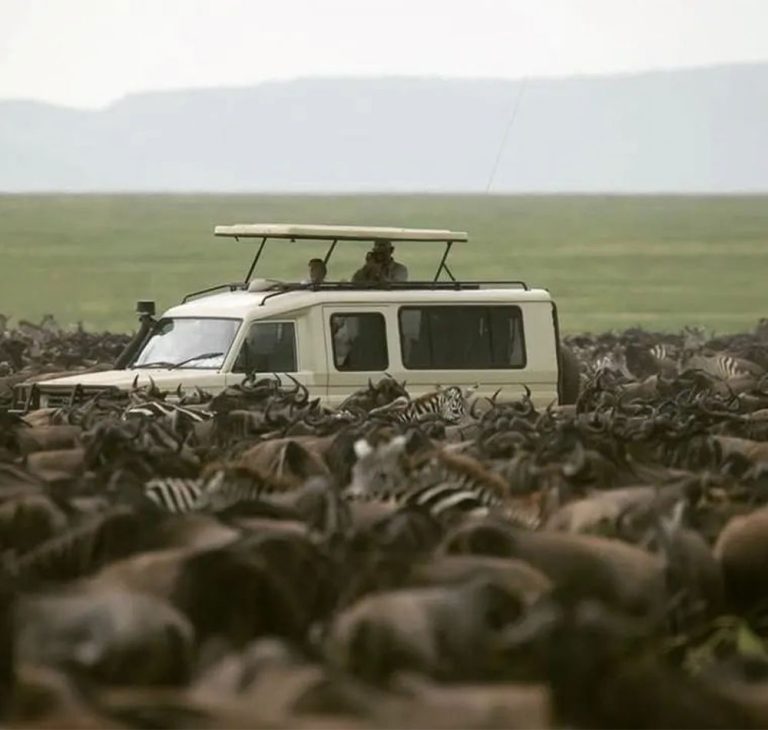
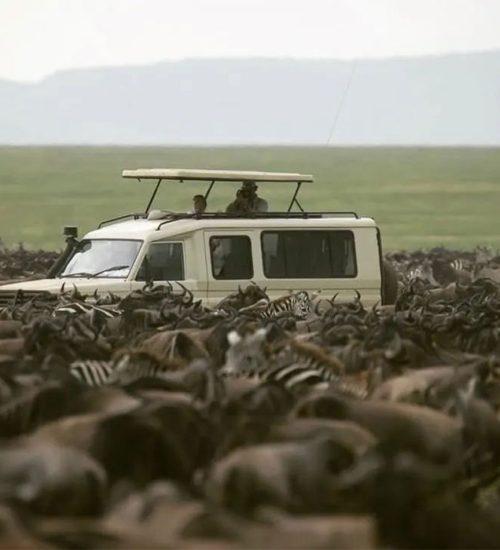
- Transport in custom safari built four wheels Nissan patrol with roof hatches / pop-up roof
- English speaking driver/guide, conversant with all requirements necessary for photographers
- Unlimited game drives as per the itinerary
- Picnic lunche, to the crater floor
- All airport transfers on arrival / departure
- Mineral water during game drives
6 Day Tanzania Wildebeest Migration Excluded
- All beverages while on safari / Nairobi
- Any international flights
- Evacuation fees
- Telephone, laundry & any items of personal nature
- Visa fees & international flights
- tips for guides & camp / lodge staff
- Travel & Medical insurance
- Balloon safari in the Serengeti – 490$ per person
Ready for your next great African adventure?
From thrilling safaris to relaxing beach escapes, your perfect trip is just a click away. Contact our Travel Specialist
6 Days Tanzania Wildebeest Migration Safari Prices:
PRICE PER PERSON SHARING:
- 2 to 3Pax: 2355 USD
- 4 to 5 Pax: 2235 USD
- 6 Pax: 2125 USD
*SSR = Single Supplement Rate for a non-sharing person in a room Supplements: All Lodges & Tented Camps: US$ 35 p/p/p/n applicable on 25 to 28 March 2023–2024 & US$ 40 p/p/p/n applicable on 24, 25, 26, 31 Dec & 1 Jan.
Children Rates: (Children 3 to 11 years old) sharing room with 2 adults pay 60% of adult rate / Children sharing own room with other children pay 80% of adult rate / Children sharing room with 1 adult pay 100% of adult rate. No discount on holiday and other supplements
Overview
The Great 6 Day Wildebeest Migration Safari is the largest animal migration in the world. Every year, more than 2 million animals (wildebeest, zebra, and gazelle) migrate in a clockwise direction across the ecosystems of the Serengeti (Tanzania) and the Masai Mara (Kenya).
In July, the wildebeest migration moves north, passing through the Lobo area (area just north of the central Serengeti National Park remote northern
The wildebeest migration can arrive to the northern Serengeti anytime from July onwards and wildebeest can be seen in the area, crossing the Mara River. In September the wildebeest herds are spread out over the northern Serengeti National Park and Kenya’s Masai Mara Game Reserve. Several large herds of wildebeest remain behind in the area and sometimes weather changes can bring the herds back into the area from the Mara. In October, the herds move south towards the central Serengeti National Park via the Lobo area of the Serengeti National Park
One of the most sought-after experiences for wildlife and nature enthusiasts, the 6 Day Wildebeest Migration Safari is the ever-moving circular migration of over a million animals across the Serengeti-Mara ecosystem. The ever-moving columns of wildebeest, joined by a host of companions, follow an age-old route in search of grazing and water. This journey takes them across the plains of the Masai Mara in Kenya, all the way south into Tanzania, through the Serengeti to the edge of the Ngorongoro Crater, before circling up and around in a clockwise direction. Along the way, high drama is always present, as thousands of animals are taken by predators, and thousands more are born, replenishing the numbers and sustaining the circle of life.
One of the most sought-after experiences for wildlife and nature enthusiasts, the Great Migration is the ever-moving circular migration of over a million animals across the Serengeti-Mara ecosystem. The ever-moving columns of wildebeest, joined by a host of companions, follow an age-old route in search of grazing and water. This journey takes them across the plains of the Masai Mara in Kenya, all the way south into Tanzania, through the Serengeti to the edge of the Ngorongoro Crater, before circling up and around in a clockwise direction. Along the way, high drama is always present, as thousands of animals are taken by predators, and thousands more are born, replenishing the numbers and sustaining the circle of life.
The 6 Day Wildebeest Migration Safari
Every year, around 1.5 million wildebeest; 350,000 Thomson’s gazelle; 200,000 zebra; and thousands of eland and other ungulates (hoofed animals) participate in what has been called ‘the greatest show on Earth’
The Great Migration in June and July
During June, the dry season starts, with large concentrations of wildebeest in the Western Serengeti and on the southern banks of the Grumeti River. Each migrating animal must face the challenge of crossing the crocodile-infested river – the first of many daunting and tense river encounters. Even though some river crossings can be seen in June, it is low season in the Serengeti, with relatively low numbers of tourists in the park. This means June offers great value as an option for a Serengeti safari (and in fact June is also very worthwhile for a safari in Kenya).
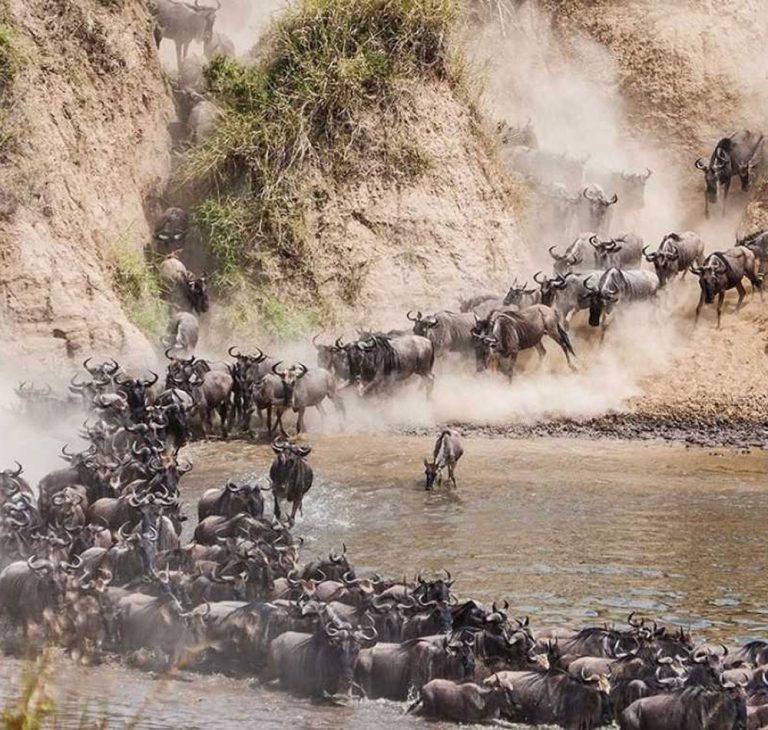
As June moves into July, the hundreds of thousands of wildebeest and zebra continue to head north along the western edge of the park towards an even riskier barrier: the Mara River in the north of the Serengeti. These river crossings are arguably one of the most exciting wildlife events to see in person; they usually start at the onset of high season in July, but timing all depends on nature.
The Great Migration in August, September and October
By August, the herds have faced the challenge of crossing the Mara River and are spread throughout the Masai Mara’s northern region, with some remaining in the northern Serengeti. In years when the river is in full flow, the panic and confusion at the crossings – combined with waiting predators and surging currents – can cause massive loss of life. But, even in years of relatively gently flowing water, the crocs take their toll – not to mention the lions and other large predators that patrol the banks, ready to ambush any wildebeest that make it to the other side. There is no single crossing: at some spots, there are just a few individuals, while others see a mass of animals moving without break for hours.
By September to October, the main chaos has ended and the migrating columns have gradually moved eastwards. However, they wildebeest will face the heavy waters of the Mara River once more as they prepare to cross once again for their return journey southwards.
The Great Migration in November and December
After the East African short rains in late October and early November, the wildebeest move down from Kenya and into the eastern limits of the Serengeti past Namiri Plains, an area known for outstanding cheetah sightings. By December, they are spread throughout the eastern and southern reaches.
In the early months of the new year, the grasses in the deep south of the Serengeti are lush with rain. This draws the herds – not only of wildebeest, but also hundreds of thousands of zebra and other plains animals. The cycle continues as the calving season starts once again
How to get there
- This tour starts and ends in Nairobi
- Africa Jo Tours can help select your international flights, but you’ll have to book them yourself help
- Fly to/from Jomo Kenyatta Airport (NBO) in Nairobi
- A transfer from and back to the airport can be arranged for an extra cost
- Additional accommodation before and at the end of the tour can be arranged for an extra cost
Itinerary in Details
Arrival Day: Arrive In Tanzania.
Arrival into Kilimanjaro airport, receive a warm welcome from our safari driver, they will assist you with your luggage and you will be on your way to your Tulia Lodge for a restful evening full board included.
Dinner and overnight at Tulia Lodge: Bed, Dinner, Lunch, and Breakfast included.
Day 1: Arusha To Ngorongoro Crater.
Non game-viewing travel time: 4 hours
Distance: 190 km
Pick up from Arusha and transfer to the Ngorongoro Conservation area. We arrive in time for lunch at the lodge and after lunch we will descend over 600 meters into the crater to view wildlife for an afternoon safari tour.
Supported by a year round water supply and fodder, the Ngorongoro National Park supports a vast variety of animals, which include herds of wildebeest, zebra, buffalo, eland, warthog, hippo, and giant African elephants. Another big draw card to this picturesque national park, is it’s dense population of predators, which include lions, hyenas, jackals, cheetahs and the ever-elusive leopard, which sometimes requires a trained eye to spot. We will visit Lake Magadi, a large but shallow alkaline lake in the south western corner, which is one of the main features of the crater. A large number of flamingos, hippos and other water birds can usually been seen here.
Dinner and overnight at Ngorongoro Tortilis Tented Camp: Bed, Dinner, Lunch, and Breakfast included.
Day 2: Ngorongoro To The Northern Serengeti National Park.
Non game-viewing travel time: 5 hours
Distance: 250 km
After breakfast we will head towards the Serengeti National Park, leaving the highlands behind, we descend into the heart of wild Africa – the Serengeti National Park – with its endless plains, rolling into the distance as far as the eye can see. We head to the Lobo area which is located just north of the Seronera area (central Serengeti National Park). The wildebeest migration, normally pass through the Lobo area every year around July / August en-route to the Kenya’s Masai Mara Game Reserve and again in late October / November en-route to the southern Serengeti National Park.We arrive in time for lunch and enjoy an afternoon game drive in the Serengeti National Park. Dinner and overnight in the Lobo area, as per the standard and type of accommodation option requested.
Dinner and overnight at Serengeti Lobo Lodge: Bed, Dinner, Lunch, and Breakfast included.
Day 3: Serengeti Wildebeest Migration Tracking Safari.
After breakfast, enjoy a full day game drive in the Serengeti National Park. The area around Lobo and the Grumeti River has good resident game throughout the year. Non-migrating game like elephant, buffalo, gazelle, zebra, lion, leopard and cheetah can be seen here all year round. The game viewing is very good and you can follow game for long periods without seeing other vehicles – truly one of the forgotten corners of the Serengeti Plains. Magnificent riverine trees can be found along the river lines and bird life such as kingfishers and fish eagles can be found here.
Dinner and overnight at Robins Safari Tented Camp: Bed, Dinner, Lunch, and Breakfast included.
Day 4: The Great Serengeti Wildebeest Migration Tracking Safari.
After breakfast we head towards the far northern reaches of the Serengeti National Park, also known as the Wagakuria. We will do a game drive en-route from the Lobo area to the Wagakuria area. As we head north, good sightings of giraffe, plain game, herds of buffalo and elephants can often be seen.
We arrive in time for lunch at the lodge and after lunch will we enjoy an afternoon game drive in the area. The wildebeest migration can normally be found in the Wagakuria area from August to October, depending on rainfall patterns. A long stretch of the Mara River runs through the northern Serengeti National Park and the Mara River provides the migration with its most difficult obstacle. Witnessing the frantic herds of wildebeest crossing the Mara River is amazing.
Dinner and overnight at Robins Safari Tented Camp: Bed, Dinner, Lunch, and Breakfast included.
Day 5: North To Central Serengeti Game Drives.
Explore The Great Serengeti Migration Safari
Starting your day at of 8am after a heavy breakfast, today you will head south towards central Serengeti. The four hour drive to the center will offer mild en route game.
The drive south from the Mara river valley takes you through hill country, the Lobo area, woodlands and then back into Seronera terrain.
The central portion of the Serengeti – known as Seronera area is one of the richest wildlife habitats in the park. It features the Seronera River, which provides a valuable water source to this area and therefore attracts wildlife well representative of most of the Serengetis’ species.
As you make your way into the Seronera region, you will begin to notice the hilly and broken terrain altering into plain grasslands. In Seronera one must really look out for the many lion prides that thrive in this region.
The interactions and survival of these lion prides provide an excellent game viewing experience all year round. A picnic lunch will be done during the day long drive itself.
Dinner and overnight at Robins Safari Tented Camp: Bed, Dinner, Lunch, and Breakfast included.
Day 6: Serengeti To Arusha.
After breakfast at the luxury camp, we will have game on route to Arusha where we will end our Great Serengeti Migration Safari the group should tip the guide around $15 to $ 20 a day, after long safari you will be able to add 4 days Zanzibar beach for only 900 USD per person .just contact us and we can arrange together with your safari package . this will be the end of Migration Safari Serengeti Ngorongoro and Zanzibar.
Included
- All Park entrance fees to Ngorongoro Conservation Area and ndutu area
- Transport in custom safari built four wheels Nissan patrol with roof hatches / pop-up roof
- English speaking driver/guide, conversant with all requirements necessary for photographers
- Unlimited game drives as per the itinerary
- Picnic lunche, to the crater floor
- All airport transfers on arrival / departure
- Mineral water during game drives
Excluded
- All beverages while on safari / Nairobi
- Any international flights
- Evacuation fees
- Telephone, laundry & any items of personal nature
- Visa fees & international flights
- tips for guides & camp / lodge staff
- Travel & Medical insurance
- Balloon safari in the Serengeti – 490$ per person
Ready for your next great African adventure?
From thrilling safaris to relaxing beach escapes, your perfect trip is just a click away. Contact our Travel Specialist